Round or elongated?
Measure from the two bolts that hold the seat down to the front edge of the bowl. About 16.5 inches means a round bowl. About 18.5 inches means elongated. A freestanding rail like ours works with both, because it stands on the floor around the toilet instead of bolting to it.
The three measurements
- The bowl at its widest. Measure straight across the widest part of the bowl or seat. Most are 14 to 15.5 inches. The armrests need about an inch of space on each side, so you're checking that the bowl fits inside the frame.
- The clear floor width. Measure the space the frame will stand in: wall to vanity, wall to tub, or wall to wall in a narrow alcove. Measure at floor level, where the feet go. Baseboards and pipes count.
- The seat height. Measure from the floor to the top of the seat. Standard toilets sit around 15 inches. "Comfort height" toilets are 16 to 17 inches. A raised toilet seat adds roughly 3 to 5 inches.
Fit checker
Enter your three measurements. The example below shows a common bathroom.
The checker uses the factory measurements of the Abrielder rail: 18.7 to 23.6 inches between the armrests, 23.2 to 26.2 inches across the outside of the frame, and armrests 25.4 to 31.3 inches from the floor. It's a guide, not a guarantee. Check your measurements before buying.
When a rail isn't the right answer
- The clear floor width is under about 25 inches. A wall-mounted grab bar may suit the space better.
- The person needs help with balance while standing, not only with sitting and rising. Ask an occupational therapist about a toilet frame with a seat, or a commode.
- The floor is uneven or very soft. The non-slip feet need a flat, firm surface.
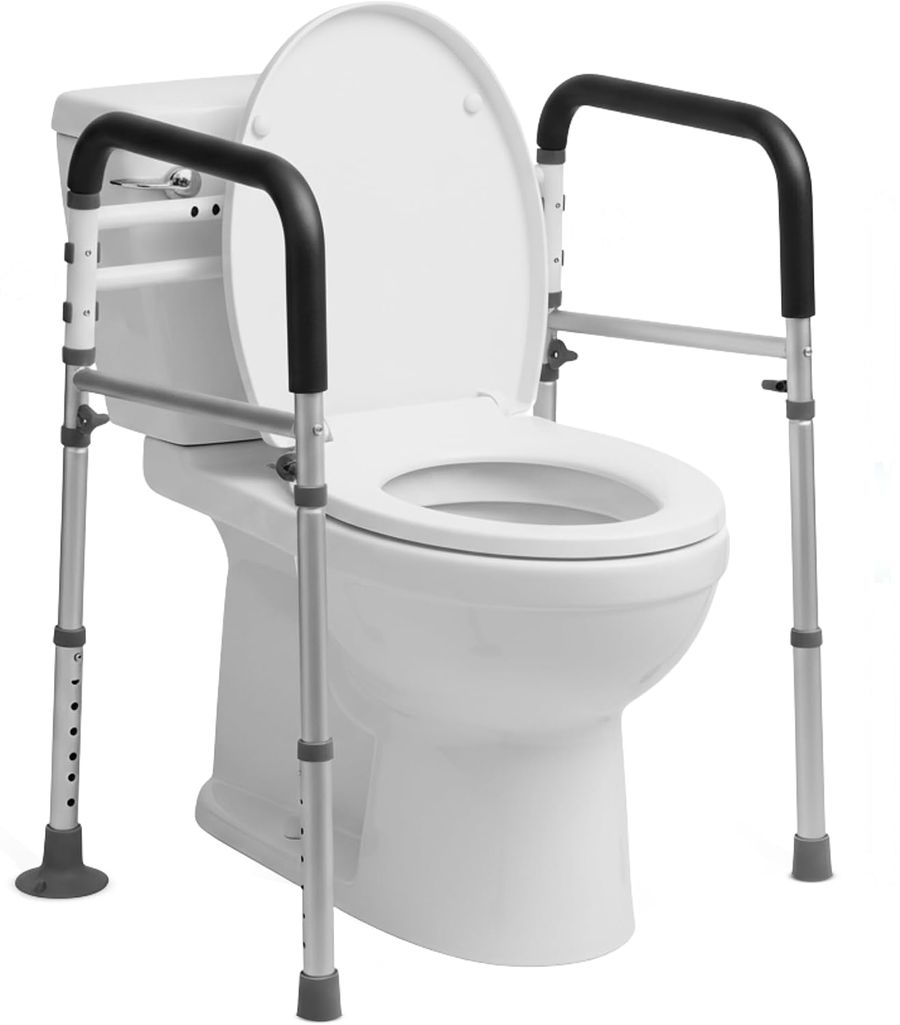
Adjustable width and height, no tools needed, folds away.
Written by Arman Markar, founder of Abrielder. General information only, not medical advice.