How do I clean a toilet safety rail?
Clean a toilet safety rail with mild soap, warm water and a soft cloth, then wipe off the soap and dry it thoroughly. Lift the rail away from the toilet first so you can reach every part, including the legs and the feet, and so the floor underneath can be cleaned too. Work from the top down: armrests, then the frame, then the legs, then the feet last. Avoid harsh abrasives, scouring pads and stiff brushes, which can scratch the finish and damage the padding. If you want to use a disinfectant or a stronger cleaner, check the product's instructions and the cleaner's label first, and try it on a small, hidden area. Put the rail back only when it and the floor are completely dry.
- Lift the rail away from the toilet and set it down on a dry floor or a towel.
- Wash the armrests with a soft cloth and mild soapy water. Don't soak them.
- Wipe the frame and legs, including around the spring buttons, where grime collects.
- Clean the feet separately (see below).
- Wipe off the soap with a clean, damp cloth.
- Dry everything with a towel, then leave it to air-dry fully.
- Clean and dry the floor, put the rail back and do the wiggle test.
How do I clean the padded armrests?
Wipe the padded armrests with a soft cloth dampened in mild soapy water, then wipe them again with a cloth dampened in plain water and dry them with a towel. Use a damp cloth, not a dripping one: padding can hold water, and you want the armrests dry before anyone leans on them again. Don't scrub with anything abrasive, and don't pick at or press hard on any edges or seams. The armrests are the part hands touch most, so a quick wipe every few days keeps them pleasant to use. Each time you clean them, look for cracks, splits or tears, because a damaged armrest is one of the signs a part may need replacing.
How do I care for the suction-cup feet?
Wash each suction-cup foot with mild soap and warm water, wipe off the soap with a clean damp cloth, and let the feet dry completely before you put the rail back. The feet are what keep a freestanding rail in place, and soap film, hair and dust are the most common reasons they stop gripping. Be gentle with the rubber edge, because that edge is what makes the seal. Don't use sharp tools, scouring pads or harsh abrasives on it. Clean the floor where the feet sit at the same time. If the rail ever starts to creep or slide, start with the feet and the floor before anything else.
- Check the rubber is still flexible and the edge has no nicks or tears.
- Make sure each foot is seated properly on its leg.
- Never put a mat, towel or pad under the feet.
If the rail is sliding even with clean feet, read why a toilet safety rail slides and how to stop it, which covers floor types, grout lines and leg heights.
What should I check every week?
Once a week, take about 30 seconds to check four things: every spring button on the legs is fully through its hole, the padded armrests have no cracks or splits, the suction-cup feet are clean and sitting flat, and the rail passes the wiggle test. For the wiggle test, press down hard on each armrest, then push it side to side. It shouldn't rock, lift or slide. A freestanding rail is held by its feet and its height pins rather than by screws, so the problems worth catching early are small ones. If anything looks or feels wrong, stop using the rail until it's fixed.
| What to check | What good looks like | If it isn't |
|---|---|---|
| Spring buttons | All fully through, all four legs on the same hole | Reset the legs to matching holes |
| Padded armrests | No cracks, splits or tears | Stop using it and contact the seller |
| Suction-cup feet | Clean, flexible, seated flat | Clean them; if damaged, stop using it |
| Wiggle test | No rocking, lifting or sliding | Clean floor and feet, recheck legs |
The setup guide explains the leg settings and armrest height in more detail.
How should I store the rail when it's folded?
Clean and dry the rail fully before you fold it, so no moisture is trapped against the frame or the padding. The Abrielder rail folds flat without tools, which makes it easy to keep in a closet or under a bed when it's not needed, for example between visits or while a bathroom is being redone. Store it somewhere dry, indoors and out of direct heat, and lay it flat or stand it securely so nothing heavy rests on the armrests or the feet. Keeping weight off the suction-cup feet helps them keep their shape. When you take it out again, check it over and set the height again for the person using it before it goes back in the bathroom.
- Clean and fully dry before folding.
- Store indoors, dry, away from heaters and direct sun.
- Nothing heavy on top of the armrests or feet.
- Before reuse: weekly check, height set, wiggle test.
When should I replace parts or the whole rail?
Stop using the rail and look into a replacement part or a new rail if an armrest is cracked or split, a suction-cup foot is torn, hardened or no longer seals on a clean floor, a spring button won't stay fully through its hole, or the frame is bent, cracked or loose at a joint. Don't repair a rail with tape, glue or parts from something else, because that can change how it holds weight and grips the floor. For an Abrielder rail, contact us at the email address below or through Amazon with a photo of the problem, and we'll tell you what we can do. Until it's sorted, take the rail out of the bathroom so it isn't used by mistake.
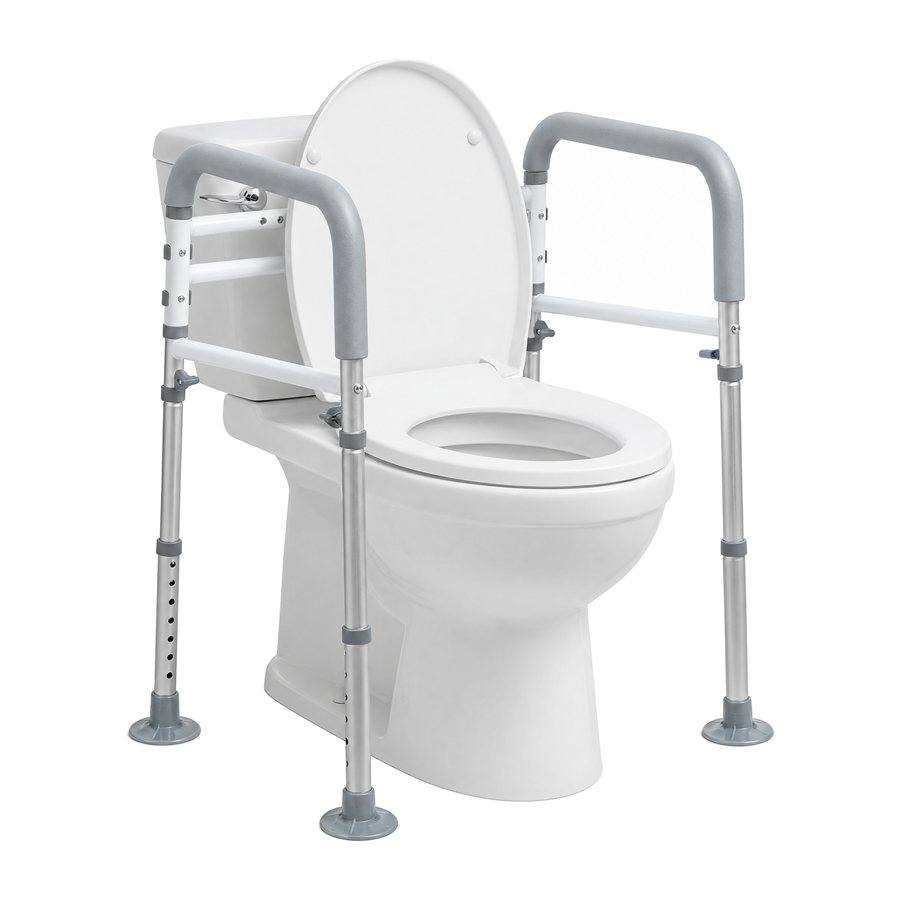
Height adjusts in 7 steps. Four suction-cup feet. No tools, no drilling.
Written by Arman Markar, founder of Abrielder. General information only, not medical advice.
← Why does my toilet safety rail slide? · Next: how to talk to a parent about bathroom safety aids →