Why does a toilet safety rail slide or wobble?
A freestanding toilet safety rail is held in place by its feet and by its own frame, not by screws in the wall or floor. On the Abrielder rail, four suction-cup feet do that job. When a rail slides or wobbles, the cause is almost always one of four things: the floor under the feet isn't clean, dry and flat; the feet themselves are dirty or not pressed down; the legs are set to different heights, so one foot is carrying less weight; or the floor surface is one a suction cup can't seal against, such as textured tile or a grout line. Each of these can be checked in a few minutes, and most can be fixed the same day.
- Wet or soapy floor. Water, soap film and cleaning residue under a foot stop it from sealing.
- Dust, hair or grit. Even small particles leave gaps that let air in.
- Uneven legs. If one leg is a hole higher or lower, the frame rocks and the lightest foot lifts.
- The wrong surface. Textured, porous or uneven floors don't let a suction cup seal.
What kind of floor do suction-cup feet need?
Suction-cup feet need a floor that is clean, dry, flat and non-porous, so the rubber can press down and seal with no air getting underneath. Smooth glazed tile, smooth sheet vinyl and other hard, glossy surfaces usually work best. Textured tile, heavily embossed vinyl, natural stone with a rough finish, wood and anything soft or cushioned are harder, because the surface has tiny gaps or gives under pressure. Grout lines are a common problem: if a foot lands across a grout line, part of the cup sits over a groove and can't seal. Before you set the rail down, look at exactly where each of the four feet will land.
| Floor surface | How suction-cup feet usually do | What to try |
|---|---|---|
| Smooth glazed tile | Usually grip well | Place each foot in the middle of a tile, not on a grout line |
| Large tiles with grout lines | Good if feet avoid the grout | Shift the frame slightly so all four feet sit on flat tile |
| Smooth sheet vinyl or linoleum | Usually grip well when clean | Clean off any polish or residue first |
| Textured or embossed vinyl, textured tile | Often struggle to seal | Check daily; ask an occupational therapist whether a different aid suits the room |
| Rough natural stone, wood, cushioned floors | Often struggle | Consider a different type of support |
How do I stop a toilet safety rail from sliding?
Work through the fix in order: clean and dry the floor, clean and dry the feet, set all four legs to the same height, place the frame so every foot sits on a flat surface away from grout lines, press each foot down firmly, then do the wiggle test. Most sliding rails are fixed by the first three steps. Do it with the rail empty and the person who uses it out of the room, then let them try it once it passes. It takes about ten minutes and needs no tools.
- Lift the rail away from the toilet so you can see the floor.
- Clean the floor where the feet go with mild soap and warm water, then wipe off the soap and dry it completely.
- Clean the feet the same way. Dry them fully before you put the rail back (more on this in how to clean and care for a toilet safety rail).
- Match the legs. Count the holes on all four legs. Every leg should be on the same hole, with every spring button fully popped through.
- Place it carefully. Set the frame around the toilet so each foot lands flat, in the middle of a tile if you can.
- Press each foot down firmly from directly above.
- Do the wiggle test. Press down hard on each armrest, then push it side to side. It shouldn't rock, lift or slide.
If you're setting the rail up for the first time, the setup guide walks through the full process, including the right armrest height.
Should I put a mat or non-slip pad under the feet?
Usually not. A bath mat, rug or loose pad under the feet gives a suction cup nothing firm to seal against, and the mat itself can slide on the floor, taking the rail with it. Soft mats also compress unevenly, so the frame can rock. Suction-cup feet are designed to sit directly on a hard floor. If there is a bath mat in front of the toilet, move it so none of the feet rest on it, and make sure the person won't trip on its edge when stepping into the frame. If you're thinking about adding any pad, grip tape or adhesive to the feet, check the product's instructions first, and don't add anything that changes how the feet sit.
- Keep bath mats, rugs and towels out from under all four feet.
- Check that nothing has been tucked under a foot to level it. That usually hides a leg-height mismatch.
- If the floor is uneven, fix the cause or choose a different aid. Don't pack a foot up.
How do I clean the suction-cup feet so they grip again?
Lift the rail, then wash each suction-cup foot with mild soap and warm water, rinse off the soap with a clean damp cloth, and let the feet dry completely before placing the rail back down. Soap film, hair, dust and cleaning residue are the most common reasons a foot stops sealing, and they build up quickly in a bathroom. Avoid harsh abrasives, scouring pads and anything sharp, which can scratch or nick the rubber edge that makes the seal. Clean the floor at the same time, because a clean foot on a dirty floor won't grip either. Doing this once a week, as part of a quick weekly check, keeps most rails from creeping.
When should I stop using a rail that keeps moving?
Stop using the rail if it still slides, rocks or lifts after you have cleaned the floor and feet, matched all four legs and pressed every foot down. Also stop if a foot is torn, split or hardened, if a spring button won't stay fully through its hole, or if the frame looks bent or damaged. A rail that moves when someone leans on it can be worse than no rail, because the person trusts it. Take it out of the bathroom so it isn't used by mistake, and contact the seller about the problem. If the floor is the issue, an occupational therapist can suggest a different kind of support for that bathroom.
- Still slides after a full clean and leg check
- A suction-cup foot is damaged or no longer flexible
- A height button won't lock fully
- The frame is bent, cracked or loose at a joint
Not sure the rail suits the space in the first place? The fit guide covers the measurements to check and the situations where a toilet safety rail isn't the right choice.
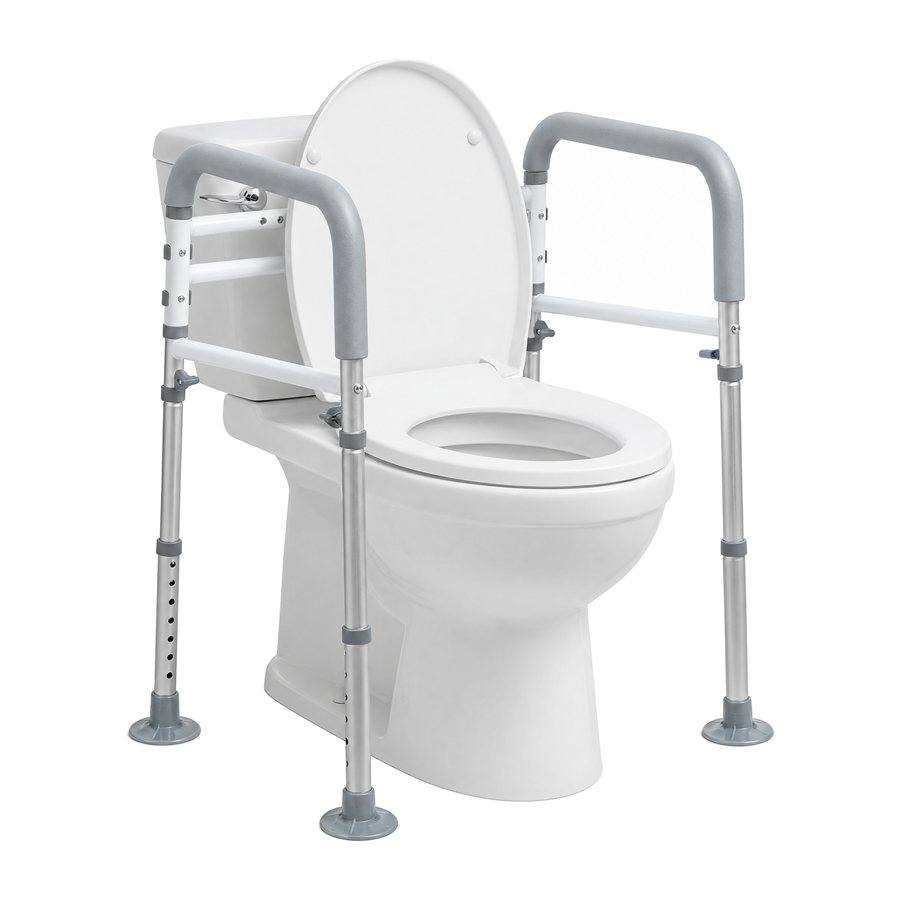
Height adjusts in 7 steps. Four suction-cup feet. No tools, no drilling.
Written by Arman Markar, founder of Abrielder. General information only, not medical advice.
← How to set up a toilet safety rail · Next: how to clean and care for a toilet safety rail →