What should a bathroom safety checklist for an older parent include?
A useful bathroom checklist covers seven zones: the floor, the toilet, the shower or tub, the lighting, what's within reach, the door, and how your parent would call for help. Falls are common at this age. The CDC says more than one out of four older people falls each year, and that falls were the leading cause of injury death for adults 65 and older in 2024. The bathroom combines wet surfaces, tight space and a lot of sitting down and standing up, so it's a sensible place to start. Walk through it with your parent, not for them, and note what they find awkward.
| Zone | What to check |
|---|---|
| Floor | Dry, uncluttered, non-slip mat or strips where it gets wet, no loose rugs |
| Toilet | Seat height that suits them, something steady to hold beside it |
| Shower or tub | Grab bars inside and outside, non-slip surface, a seat if they need to sit |
| Lighting | Bright light by day, a light left on or an automatic night light after dark |
| Reach | Toilet paper, soap and towels reachable without bending or stretching |
| Door | A lock that can be opened from outside in an emergency |
| Calling for help | A phone, alert button or smart speaker they can use from the floor |
You can print the same list as part of our free Home Safety Checklist (PDF), which covers the rest of the house too.
How do I make the bathroom floor less slippery?
Keep the floor dry and clear, and add grip wherever it gets wet. The National Institute on Aging recommends nonskid mats, strips or carpet on all surfaces that may get wet, and suggests avoiding throw rugs and small area rugs. In practice that means a non-slip mat inside the tub or shower, a bath mat that stays put outside it, and nothing loose on the floor between the door and the toilet. Wipe up water and soap residue straight away, and don't let anyone walk on a freshly washed floor until it's dry.
- Remove loose rugs, or replace them with a bath mat that has a rubber backing.
- Move laundry baskets, scales and bins out of the walking path.
- Keep a towel within reach of the shower so drips don't travel across the room.
What support does an older parent need beside the toilet?
Most people need two things at the toilet: a seat at a height they can sit on and rise from comfortably, and something steady to hold while they do it. NIA suggests grab bars near toilets. If the wall isn't suitable for drilling, or you rent, a freestanding toilet safety rail stands on the floor around the toilet and gives armrests on both sides. A towel bar, sink edge or toilet-roll holder is not built to take a person's weight, so make sure your parent isn't relying on one.
- Check the seat height first. Our toilet seat height guide covers standard, comfort-height and raised seats.
- Measure before you buy a rail. The fit guide lists the three measurements to take.
- Set armrests to your parent's forearm height. The setup guide shows how.
How can I make the shower or tub easier to get in and out of?
Give your parent something firm to hold at every step: getting in, standing or sitting while washing, and getting out. NIA recommends grab bars on both the inside and outside of the tub and shower, plus a non-slip surface underfoot. Wall grab bars need secure fixing, so have them installed properly. If standing for a whole shower is tiring, ask an occupational therapist whether a shower chair or tub transfer bench would suit your parent, and which kind fits your tub.
- Inside: a non-slip mat or strips, and a grab bar where they naturally reach.
- Outside: a grab bar or firm hold beside the entry, and a bath mat that doesn't slide.
- Within reach while seated or standing: soap, shampoo and a hand-held shower head if you have one.
How much light does a bathroom need, day and night?
The bathroom should be bright enough by day to see a wet patch on the floor, and never fully dark at night. NIA suggests you leave a light on in the bathroom at night or use a night light that turns on automatically in the dark, and MedlinePlus recommends good lighting especially for the path from the bedroom to the bathroom. Check that the switch is reachable from the doorway, so nobody walks into a dark room to find it.
Night trips need their own plan. See safer night-time bathroom trips for the route from bed to toilet.
What should be within reach, and should the door lock?
Put everything your parent uses daily at a height they can reach without bending low, stretching up or twisting: toilet paper beside the toilet, soap and shampoo at shoulder height in the shower, towels next to the exit. NIA advises keeping items you use often at waist level or within easy reach. For the door, privacy matters, but so does access. Many interior privacy locks can be opened from outside with a small tool or coin; check yours, and agree with your parent how you'd get in if they needed help.
- Move the toilet-roll holder or add a freestanding one if it's behind them.
- Clear high shelves of anything used every day.
- Keep the doorway and the space just inside it clear, in case someone needs to come in quickly.
How can they call for help from the bathroom?
Plan for the moment your parent needs help and nobody is in the room. NIA suggests options such as an emergency response system with a button worn on a necklace or bracelet, carrying a well-charged phone around the house, a smart speaker that can call contacts, or a smartwatch that can make emergency calls. Whatever you choose, test it in the bathroom itself, with the door shut, and make sure it works from floor level. Then agree on a simple routine, such as a check-in call at the same time each day.
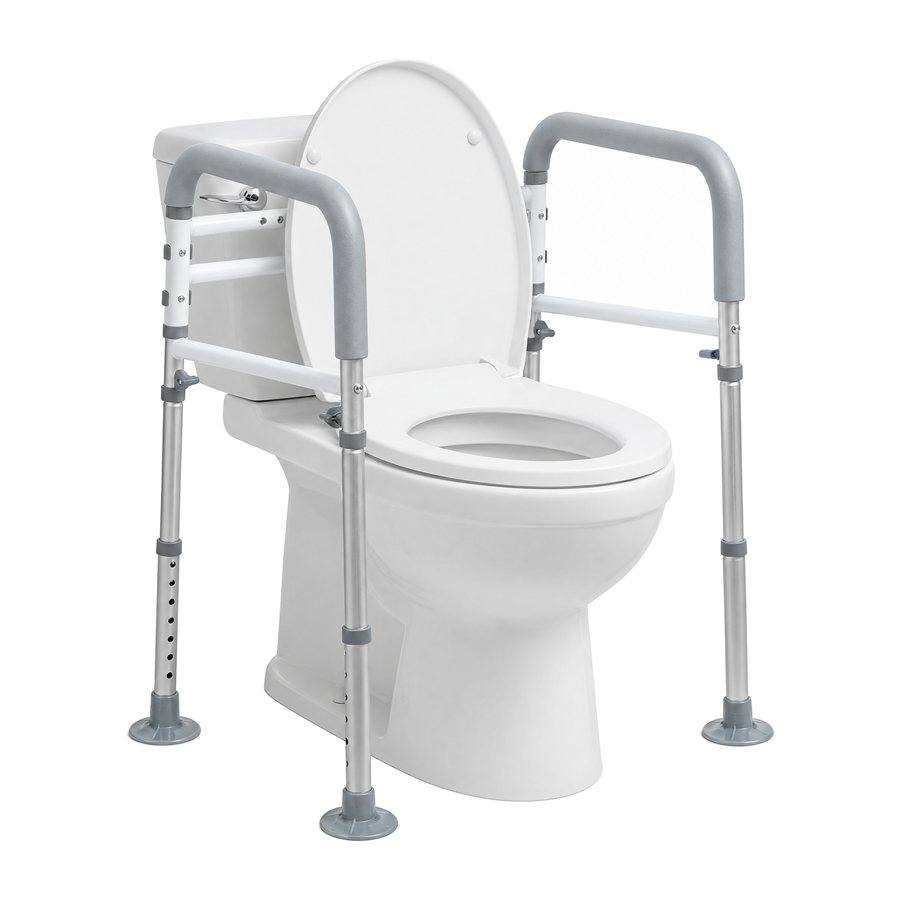
Freestanding toilet rail. Armrests adjust in 7 heights. No tools, no drilling, folds flat.
Sources
- CDC, About Older Adult Falls (2024 deaths and emergency department visits)
- CDC, Older Adult Falls Data
- National Institute on Aging, Preventing Falls at Home: Room by Room
- MedlinePlus, Preventing falls
Written by Arman Markar, founder of Abrielder. General information only, not medical advice.
Next: which toilet seat height is right? → · Safer night-time bathroom trips →