What is the difference between standard, comfort-height and raised toilet seats?
The difference is how far the top of the seat sits above the floor. A standard toilet is typically about 15 inches to the top of the seat. A comfort-height toilet, sometimes sold as "chair height" or "right height", is typically about 17 to 19 inches. A raised toilet seat is an add-on that sits on an existing toilet and typically adds about 3 to 5 inches. For comparison, the US Access Board's ADA guide sets 17 to 19 inches to the top of the seat for accessible toilets in public and common-use facilities, though homes aren't required to follow it.
| Seat type | Typical height |
|---|---|
| Standard toilet | About 15 in |
| Comfort-height toilet | 17 to 19 in |
| Standard toilet with a raised seat | About 18 to 20 in |
| ADA accessible toilet (public facilities) | 17 to 19 in |
How do I measure toilet seat height?
Measure straight up from the floor to the top of the seat, with the lid up and the seat down. If your parent already uses a raised seat or a cushioned seat, measure with it in place, because that's the height they actually sit on. Measure at the front edge of the seat, where the backs of their legs rest. Write the number down with the date, alongside the bowl shape and width. You'll need all three if you buy a raised seat or a toilet safety rail later.
- Lower the seat and make sure it's sitting flat on the bowl.
- Measure from the floor to the top of the seat at the front edge.
- Note the bowl shape. The fit guide shows how to tell round from elongated.
- Measure your parent too: with them seated upright, measure from the seat to the bottom of their elbow. You'll use it for armrest height.
How do I know which seat height is right for my parent?
Watch your parent sit down and stand up, and ask how it feels. A seat that's too low makes them drop the last few inches and push hard to rise. A seat that's too high can leave their feet not resting flat on the floor. The right height is somewhere they can lower themselves with control, sit with feet flat, and stand without a struggle. There's no single correct number, because it depends on their height, strength and joints. An occupational therapist can watch them and recommend a height, which is worth doing after any change in health or mobility.
- Try the same movement on dining chairs of different heights to get a feel for what suits them.
- Notice whether they reach for the sink, towel bar or wall. That's a sign they need something steady to hold.
- Try at night as well as by day. Getting up is often harder when tired.
When does a raised toilet seat make sense?
A raised toilet seat can make sense when your parent finds a standard or comfort-height toilet too low, and replacing the toilet isn't practical. It's quicker and cheaper than a new toilet, and it can come off again if needs change. Some raised seats include their own armrests; others are just a seat. Check that it fits your bowl shape, sits firmly without rocking, and is installed exactly as the maker says. Ask the doctor, discharge team or occupational therapist if a particular height is recommended, especially after a hospital stay.
How do toilet safety rail armrests pair with seat height?
Armrests work best at your parent's forearm height when seated, so their height above the seat matters more than their height above the floor. Take the armrest height from the floor, subtract the seat height, and compare that with your parent's seat-to-elbow measurement. The Abrielder Toilet Safety Rail's armrests adjust from 25.4 to 31.3 inches above the floor in 7 settings. On a standard 15-inch seat, that puts them about 10 to 16 inches above the seat. On a higher or raised seat, the same armrests sit closer to the seat, so check the numbers before you buy.
| Seat height (floor to top of seat) | Armrests above the seat |
|---|---|
| 15 in (standard) | About 10.4 to 16.3 in |
| 17 in (comfort height) | About 8.4 to 14.3 in |
| 19 in (standard plus a 4 in raised seat) | About 6.4 to 12.3 in |
| 20 in (standard plus a 5 in raised seat) | About 5.4 to 11.3 in |
The armrest height checker does this sum for you, and the setup guide explains how to set the armrests once the rail arrives.
What else should I check around the toilet?
Seat height is one part of the picture. Your parent also needs a steady hold on both sides, a clear and dry floor, and enough light to see by, day and night. The National Institute on Aging suggests grab bars near toilets and a light left on in the bathroom at night. Check that toilet paper is within reach without twisting, and that there's room to stand up and turn. Our bathroom safety checklist covers the whole room, and safer night-time bathroom trips covers the route from bed.
You can also download our free Home Safety Checklist (PDF) to work through every room.
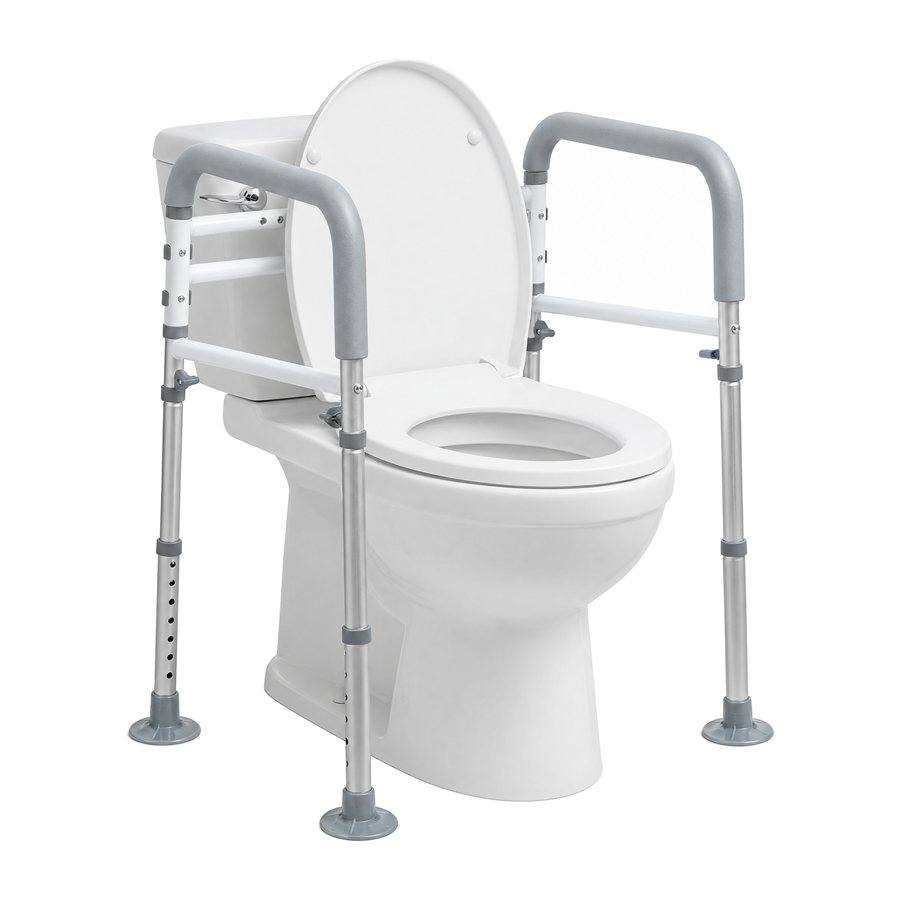
Armrests adjust from 25.4 to 31.3 in above the floor in 7 settings. No tools, no drilling.
Sources
- US Access Board, Guide to the ADA Accessibility Standards, Chapter 6: Toilet Rooms
- National Institute on Aging, Preventing Falls at Home: Room by Room
Written by Arman Markar, founder of Abrielder. General information only, not medical advice.
← Will a toilet safety rail fit my toilet? · Next: set up the rail at the right height →