Why are night-time bathroom trips harder for an older parent?
At night your parent is walking a familiar route in unfamiliar conditions: low light, just out of bed, often in a hurry, sometimes without glasses. Things that are easy to step around by day, like a rug edge, a cord or a pair of slippers, are harder to see. Falls are common at this age, with the CDC reporting that more than one out of four older people falls each year. The good news is that most of the night-time setup is simple: light, a clear path and a few things in the right place.
The best way to start is to walk the route yourself at night, with the main lights off, from the side of the bed your parent gets out of to the toilet and back.
What lighting works best for a night-time path to the bathroom?
Use light that comes on without anyone hunting for a switch in the dark. The National Institute on Aging suggests night lights and light switches close to the bed, motion-activated plug-in lights that turn on as you walk by, and leaving a light on in the bathroom or using a night light that turns on automatically in the dark. MedlinePlus also recommends good lighting especially for the path from the bedroom to the bathroom. Aim for an even line of light, so your parent never walks from a lit area into a dark one.
- At the bed: a lamp or switch they can reach while still sitting, and a flashlight in case the power goes out.
- Along the route: plug-in night lights or motion-activated lights at the bedroom door, along the hallway and at any turn.
- In the bathroom: a night light that switches on automatically, or a light left on.
- Bulbs: replace dead bulbs straight away, and check night lights every few weeks.
How do I clear the route from bed to bathroom?
Treat the route as a path that must stay empty, not a space that happens to be clear today. NIA advises not using throw rugs or small area rugs, keeping electrical cords near walls, and arranging furniture so it isn't in the way. Walk the route and pick up anything on the floor, then look for the things that come back each evening: shoes kicked off by the bed, a laundry basket in the hall, a phone charger cable across the floor. If a pet sleeps in the bedroom, know where it settles.
| Point on the route | What to check |
|---|---|
| Getting out of bed | Clear floor, light within reach, slippers with a firm sole nearby |
| Bedroom door | Door left open or easy to open, no rug at the threshold |
| Hallway | Night lights, no cords or baskets, nothing on the floor |
| Bathroom door | Switch or automatic light reachable from the doorway |
| Toilet | Seat height that suits them, something steady to hold on both sides |
What should be next to the bed at night?
Keep a small, uncluttered set of things on the side your parent gets out of: a light, a phone, and anything they reach for before standing. NIA suggests a flashlight by the bed and a landline or well-charged phone near the bed. Glasses should sit where they can find them without looking. Encourage your parent to switch the light on before they stand up, not after.
- Lamp or switch, flashlight and phone within arm's reach
- Glasses in the same place every night
- A walking aid, if they use one, parked where they can reach it from the bed
- Slippers that stay on, with a non-slip sole
How can I make the toilet easier to use at night?
At night your parent wants to sit down and get up again without having to think about it. That means a seat at a height that suits them and something steady to push up from on both sides. NIA recommends grab bars near toilets. A freestanding toilet safety rail is another option: it stands on the floor around the toilet with an armrest on each side, and needs no drilling. Whichever you use, make sure it's in the same place every night so they can find it by feel.
- Check the seat height with our toilet seat height guide.
- Set armrests to forearm height using the setup guide.
- Keep toilet paper on the side they naturally reach to.
Is a bedside commode worth asking about?
For some people, the shortest trip to the bathroom is no trip at all. A bedside commode is a portable toilet chair that stands near the bed, and MedlinePlus lists a portable toilet among the equipment you can ask a discharge planner about. Whether it's right for your parent depends on how they move and what they're comfortable with, so ask their doctor or an occupational therapist. If they've recently been in hospital, see getting the home ready after a hospital stay.
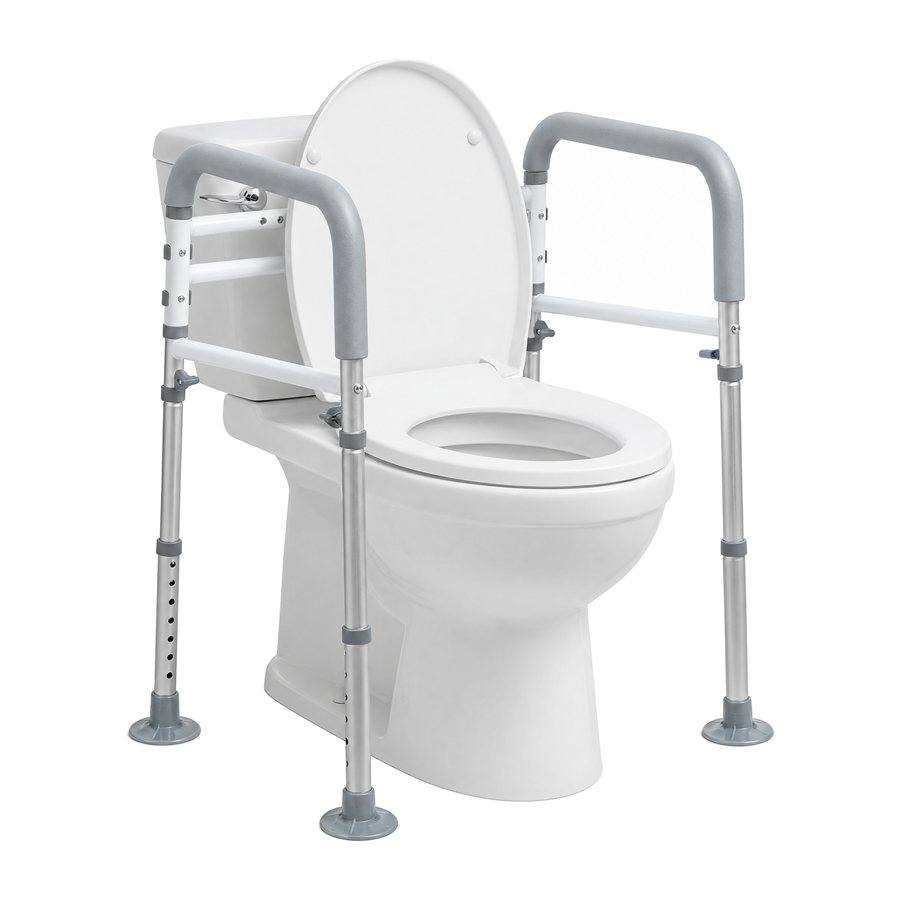
Freestanding toilet rail. Two padded armrests, 7 height settings. No tools, no drilling.
Sources
- National Institute on Aging, Preventing Falls at Home: Room by Room
- MedlinePlus, Preventing falls
- MedlinePlus, Leaving the hospital: your discharge plan
- CDC, Older Adult Falls Data
Written by Arman Markar, founder of Abrielder. General information only, not medical advice.
← Bathroom safety checklist · Next: which toilet seat height is right? →