Who should I ask about what my parent will need at home?
Ask the hospital team before you change anything at home. According to MedlinePlus, a social worker, nurse, doctor or other provider will work with you on a discharge plan, and you can ask the nurse or discharge planner whether your parent will need special equipment such as a walker, shower chair or portable toilet. An occupational therapist can look at how your parent moves and what the home needs. Everything medical, from medicines to wound care to activity limits, comes from that team, not from a checklist. This guide covers only the practical side: getting the rooms ready.
Questions worth writing down and taking to the discharge conversation:
- Which rooms will my parent need to use in the first week, and can they manage stairs?
- What equipment do you recommend, and will it be supplied, rented or bought?
- Can an occupational therapist or nurse visit the home, or advise on the setup?
- Is there anything they shouldn't do on their own at first, such as showering?
- Who do we call with questions after we get home?
What should I do to the home before the first day back?
Work in order of what your parent will use first: the route from the front door to a chair, the bathroom, and the bed. MedlinePlus advises that you and your caregiver should plan ahead for your arrival. In practice, that means doing the heavy lifting a few days early: moving furniture, delivering and setting up equipment, and checking lights. Then do a final walk-through the day before, ideally at the same time of day your parent will arrive, so you see the light they'll see.
| When | What to do |
|---|---|
| As soon as you know the date | Ask the discharge team about equipment and any home visit |
| A few days before | Clear paths, move furniture, set up the bathroom and bed area |
| The day before | Walk the route from door to chair to bathroom to bed, and check every light |
| Arrival day | Watch how your parent moves, and adjust heights and placement together |
How do I clear a safe path through the house?
Make every route your parent will walk wide, clear and flat, with nothing to step over. NIA's home checklist suggests keeping electrical cords near walls and away from walking paths, arranging furniture so it isn't in the way, and not using throw rugs or small area rugs. If your parent will use a walker, the path needs to be wide enough for it, including through doorways and around the end of the bed. Walk each route yourself and look down: anything at ankle height is worth moving.
- Front door to the chair they'll sit in most
- That chair to the bathroom
- The bed to the bathroom, which they'll often walk at night
- The bed or chair to the kitchen, if they'll be getting their own drinks
How should I set up the bathroom for the first weeks?
Set the bathroom up so your parent has something steady to hold at the toilet and in the shower, and a non-slip surface wherever it gets wet. NIA suggests grab bars near toilets and on both the inside and outside of the tub and shower. If installing bars isn't possible in time, a freestanding toilet safety rail can be set up in minutes without drilling. Ask the discharge team whether a shower chair, raised toilet seat or bedside commode is recommended for the first weeks.
- Toilet: check the seat height suits them. Our toilet seat height guide explains the options.
- Toilet rail: measure with the fit guide, then set the armrests with the setup guide.
- Shower: non-slip mat inside, a bath mat that stays put outside, toiletries at shoulder height.
Our bathroom safety checklist goes through every zone in more detail.
How should I set up the bed area?
Make the bed area somewhere your parent can sit, lie down, get up and reach what they need without stretching. MedlinePlus suggests a bed low enough that your feet touch the floor when you sit on the edge, and NIA suggests night lights and light switches close to the bed, a flashlight by the bed, and a charged phone nearby. If stairs are a problem at first, ask the discharge team whether a bed downstairs makes sense for a while.
- Clear space on the side they get out of bed, with a firm, non-slip surface underfoot.
- A bedside table with a lamp they can switch on before standing.
- If a bed rail or hospital bed is suggested, ask who will fit it. Our bed rail guide explains the US safety standard and what to check.
What should be within reach for the first few days?
Put the things your parent will use every day where they can reach them while sitting, without bending low or standing on anything. NIA advises keeping items you use often at waist level or within easy reach. The fewer trips across the room, the easier the first days are. Set up a small station by the bed and another by their main chair, and keep a written list of emergency numbers in large print by each.
- Phone and charger, plus a list of important numbers
- Water, glasses, the TV remote and reading material
- Any written discharge instructions, kept in one folder
- Tissues, a wastebasket and a light blanket
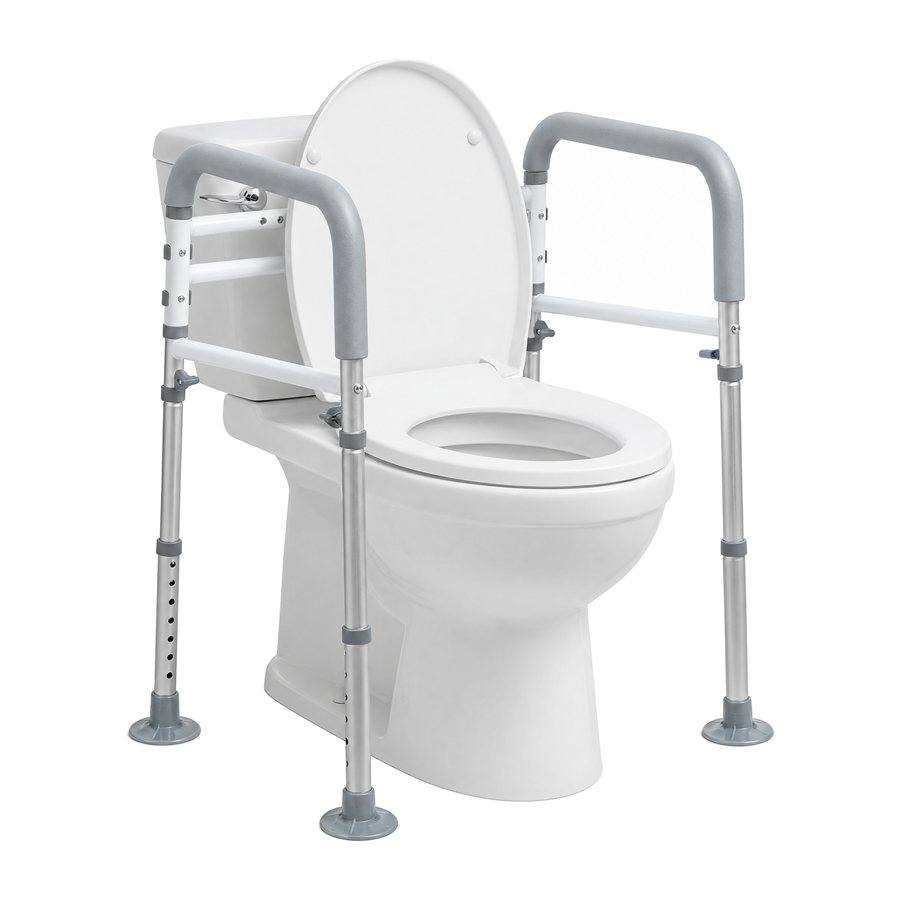
Freestanding toilet rail. Sets up in about ten minutes without tools. No drilling, folds flat.
Sources
- MedlinePlus, Leaving the hospital: your discharge plan
- National Institute on Aging, Preventing Falls at Home: Room by Room
- MedlinePlus, Preventing falls
Written by Arman Markar, founder of Abrielder. General information only, not medical advice.
← Bathroom safety checklist · Next: safer night-time bathroom trips →